Apr 2, 2026
How the UrbanThink Platform structures, compartmentalizes, and enhances its clients' data
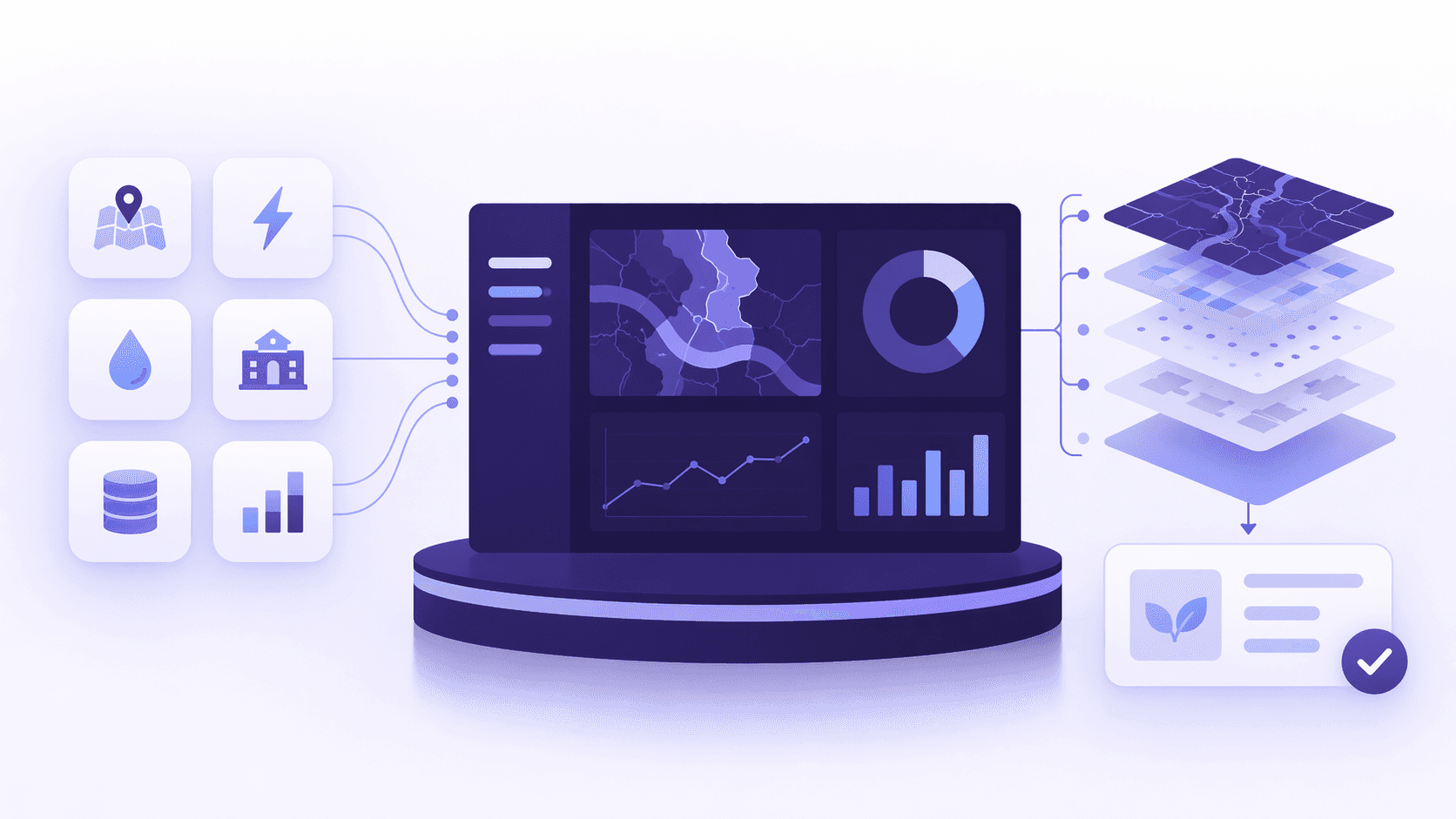
In an environmental management platform, data is not just a stream to display on a dashboard. It is a sensitive, structured, contextualized, sometimes strategic material, which directly affects the reliability of decision-making.
At UrbanThink Platform, data governance is therefore neither limited to a confidentiality clause nor to a simple hosting issue. It rests on a clear management architecture: distinguishing data types, qualifying each source, defining usage rules, compartmentalizing environments, and preserving the client's control over what it entrusts to us.
The challenge is not only to centralize data. The challenge is to know which data enters the platform, under what conditions, for what uses, with what level of confidence, and within what limits. This is also what makes it possible, as we explain in our article on the digital twin and the transformation of data into decisions, to turn data into a true decision-support tool.
A first rule: not all data has the same status
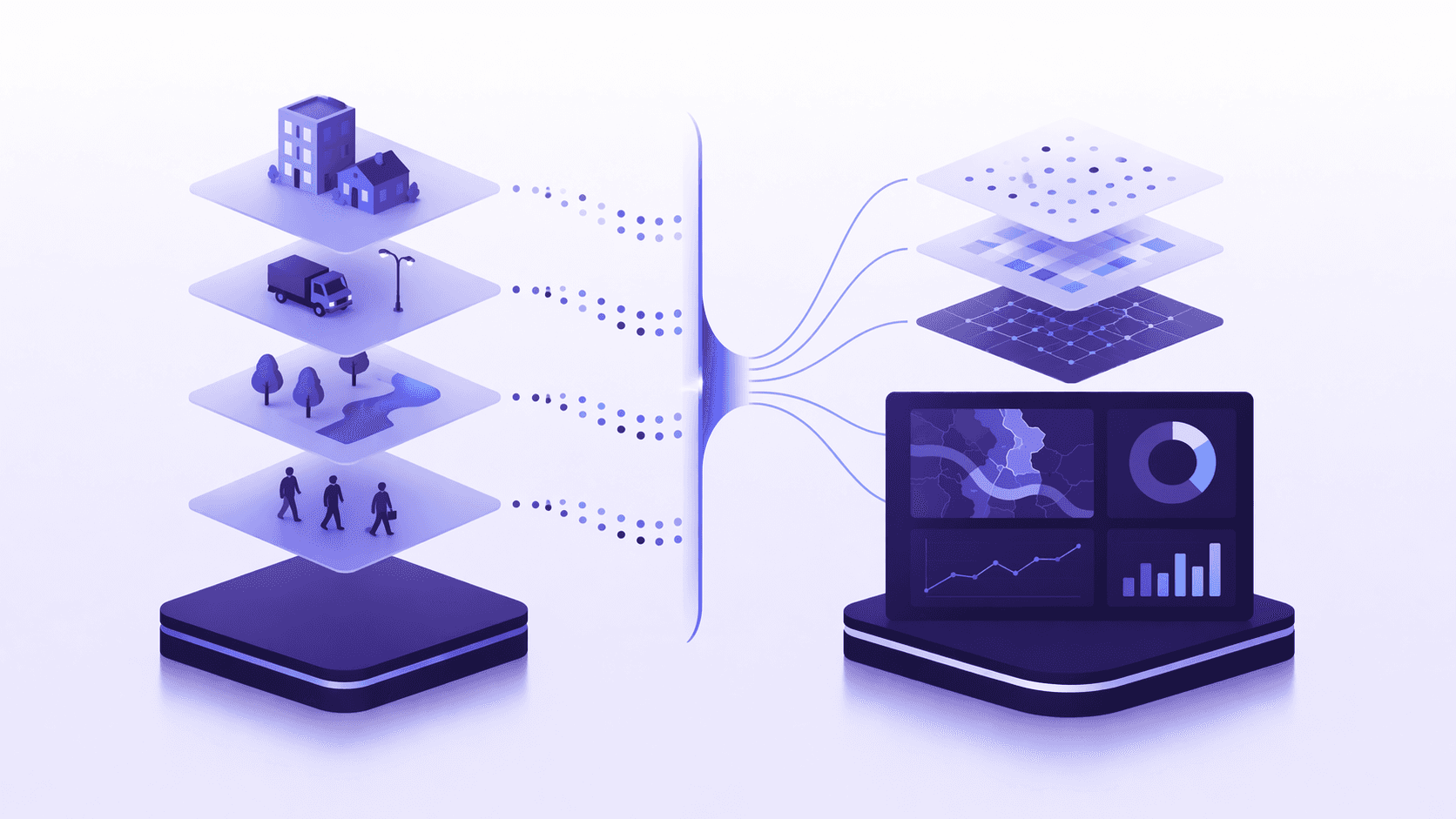
One of the most common mistakes in digital projects is to talk about “data” as if it were a homogeneous block. In reality, a platform like UrbanThink handles several layers of data that must be distinguished from the outset.
We separate in particular:
data provided by the client: business, asset, mapping, energy, environmental, operational history, readings, inventories, plans, files, or streams from third-party systems;
external reference data: open data, geographic reference datasets, regulatory data, analysis layers, or public datasets;
data calculated within the platform: indicators, scores, aggregations, cross-references, visualizations, business views;
UrbanThink proprietary building blocks: data model, structuring logic, processing rules, analysis methodologies, presentation layers, application components.
This separation is fundamental, because it avoids a very common confusion between the client's data and the platform's software-added value.
UrbanThink's value does not rest on appropriating client data. It rests on the ability to integrate it, make it reliable, cross-reference it, and make it actionable within a controlled framework. This logic is also reflected in our approach to data stewardship, designed to unlock the potential of water, energy, soil, or mobility data.
Before integrating data, we qualify the source
A non-qualified data source is not data that can be used for steering.
Before it is integrated into the platform, each source must be placed within a precise framework. This means documenting several structuring elements:
its origin;
its owner or responsible party;
its format;
its granularity;
its update frequency;
its geographic or functional scope;
its level of reliability;
its possible sensitivity;
its conditions of use and distribution.
This step is essential, because it prevents data with neither the same level of robustness, nor the same status, nor the same purpose from being brought into the same environment.
In other words, we do not connect streams “as a matter of principle.” We build a chain of trust around each source. This requirement also echoes what we already defend on other data-structuring topics, for example in our article on OPERAT and the need to structure, make reliable, and enhance energy data.
A robust platform does not mix data layers
The governance challenge is not only at the time of collection. It also plays out in the way the platform organizes the relationships between data.
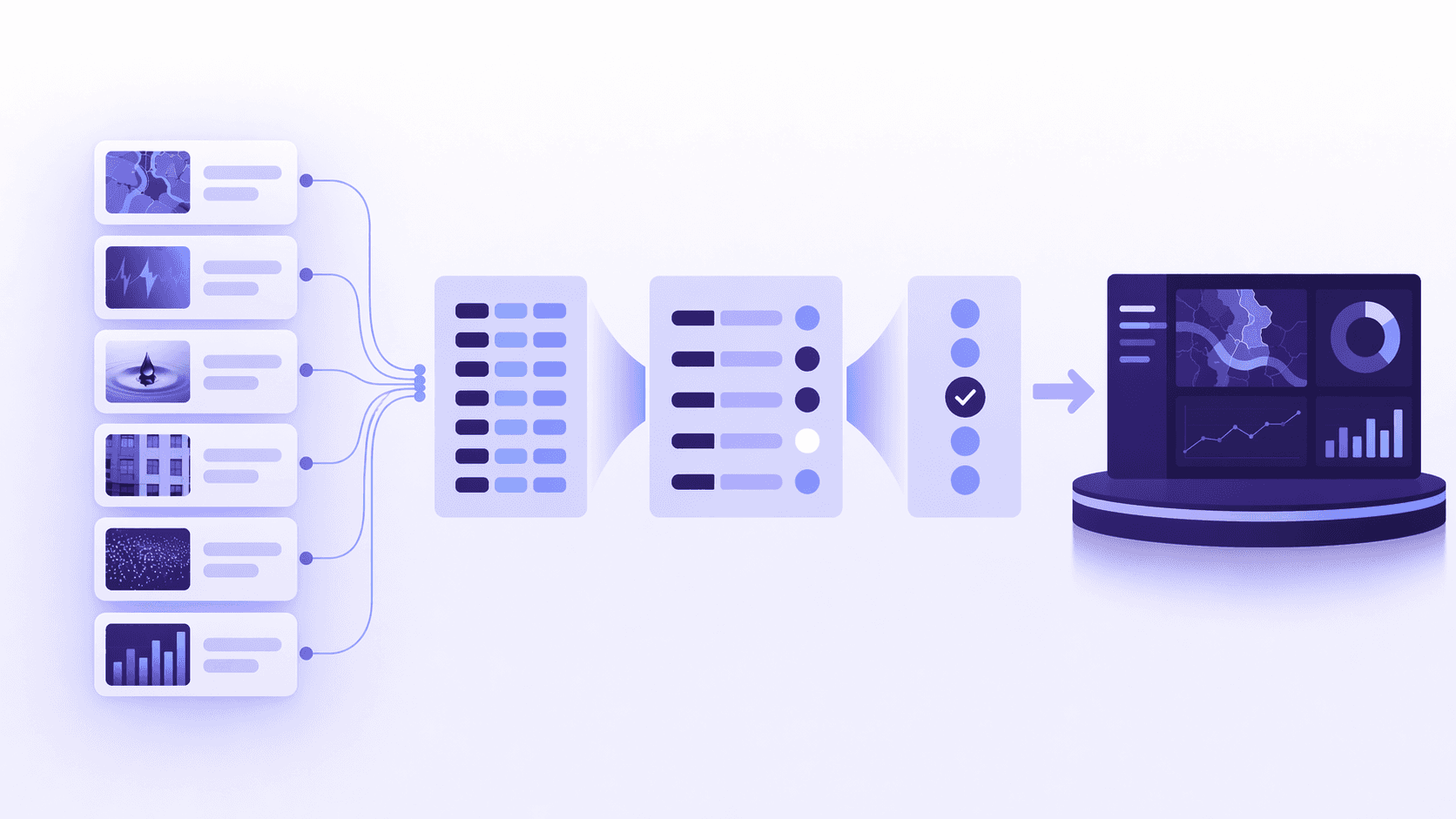
A raw data point does not have the same value as an enriched data point. A reference data set does not have the same function as a derived indicator. Information provided by the client does not have the same status as a layer produced by an UrbanThink processing step.
That is why our approach is to maintain a clear distinction between:
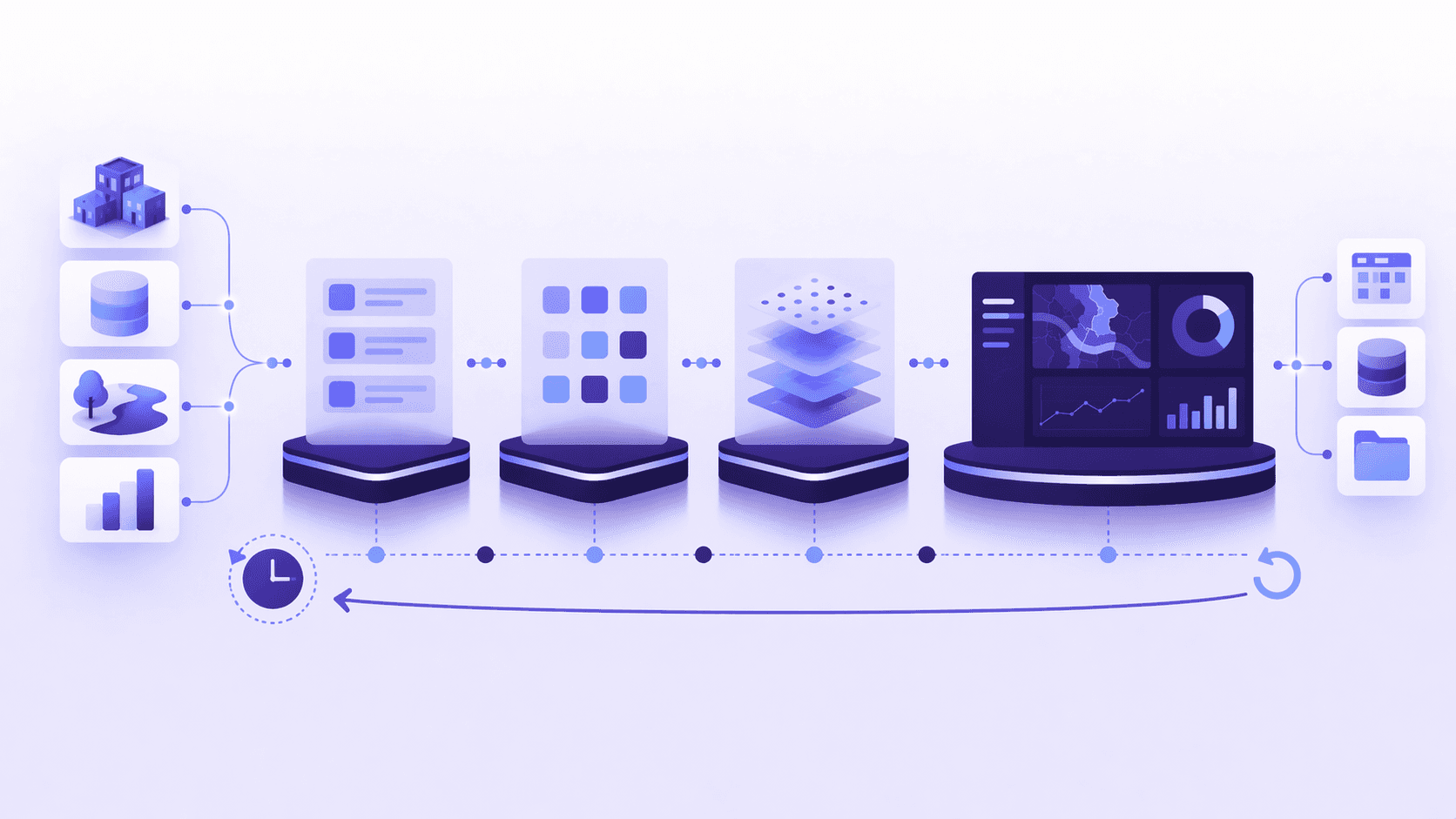
the original source;
the transformed data;
the representation in the interface;
and the final business indicator.
This traceability avoids a common pitfall in complex platforms: no longer knowing what comes from the field, from calculation, from configuration, or from interpretation.
Yet as soon as that boundary becomes blurred, trust declines. And without trust, there is neither a robust dashboard, nor usable mapping, nor key indicators that are truly useful for decision-making.
Segmentation is not an option, it is a condition of trust
A multi-stakeholder or multi-site platform cannot function seriously without a logic of segmentation.
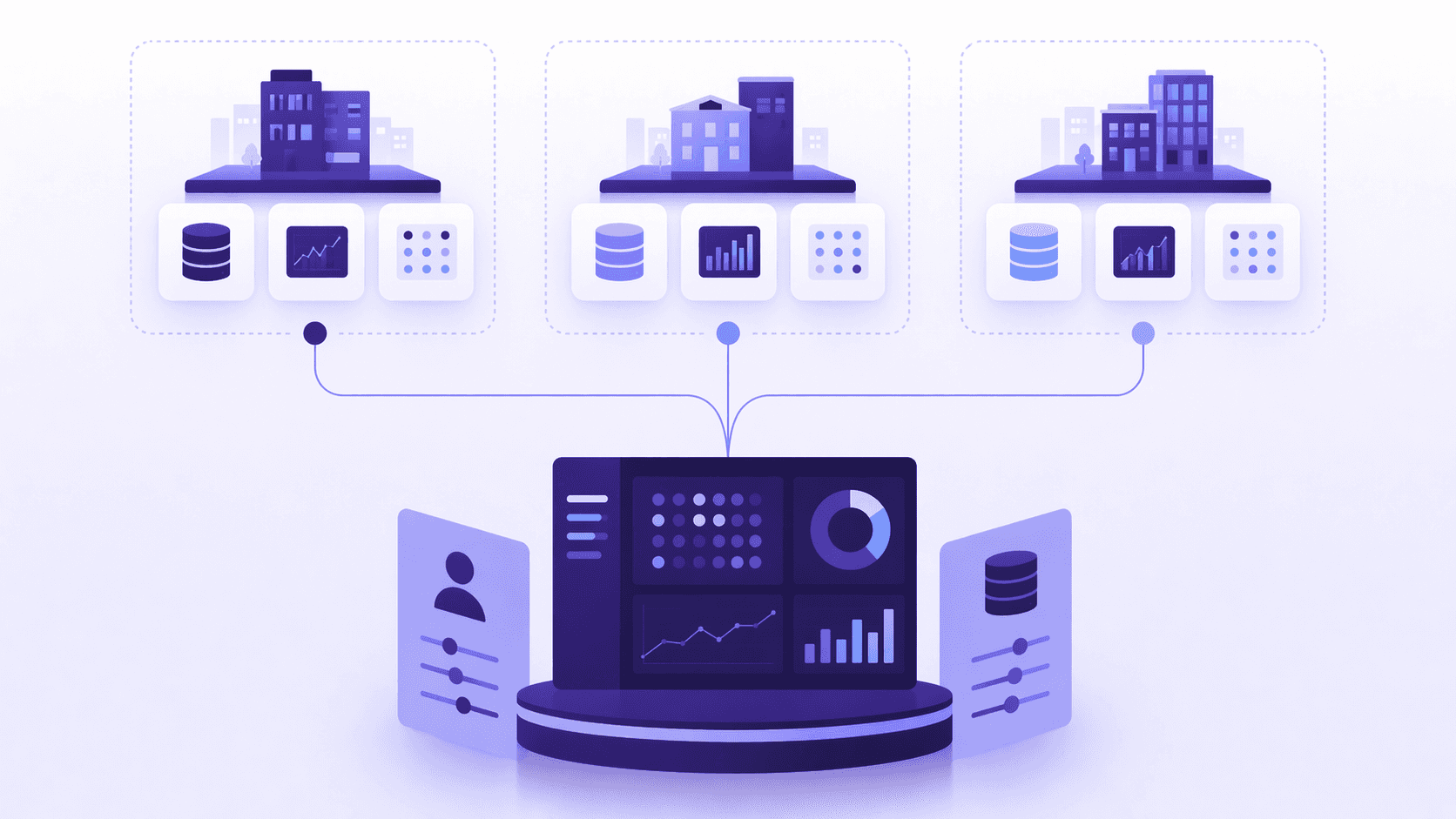
At UrbanThink Platform, data governance requires structuring environments in a way that avoids any confusion between clients, projects, scopes, or levels of access. This means thinking not only in terms of display, but in terms of an architecture of separation: separation of spaces, views, configurations, data sets used, and associated rights.
This segmentation is essential for three reasons:
to protect sensitive data;
to avoid unwanted overlap between scopes;
to ensure the client that their management environment remains controlled, clear, and dedicated to their uses.
In this framework, data governance is not an add-on of documentation. It is part of the very way the platform is structured. This is especially true in the logic of multi-site management in industry, multi-site management for property companies, or multi-site and multi-risk assessment for ports and airports.
Access rights must follow the client’s actual organization
One sign of immature governance is when a platform gives everyone the same rights.
In reality, uses are not uniform. A property director, an environmental manager, a site operator, an external partner, or a technical administrator do not have the same needs, the same level of responsibility, or the same legitimacy to view, modify, or export certain information.
Serious governance therefore requires distinguishing between:
reading rights;
contribution rights;
validation rights;
administration rights;
export rights;
and rights associated with a given scope: site, group of sites, theme, layer, or dashboard.
Data is not protected only by a password. It is protected by an authorization policy that is consistent with the client’s actual organization. This dimension directly addresses the challenges of multi-stakeholder governance, which we encounter in many projects supported by UrbanThink.

The key question is not “where is the data?”, but “who can do what with it?”
Data sovereignty is often reduced to hosting. It is an important issue, but not the only one.
The real issue, in a decision-support platform, is control over usage. Data may be well hosted and yet poorly governed if the conditions for access, transformation, export, or reuse remain unclear.
At UrbanThink, this means setting clear boundaries:
what is integrated for visualization is not automatically reusable for other uses;
what is visible in a dashboard is not necessarily exportable by everyone;
what is shared for one project is not meant to feed another scope without an explicit framework;
what belongs to the client is not meant to dissolve into an opaque pooling logic.
This is precisely where respect for client data is at stake: in the precision of usage rules, not in general statements.
Client data must never be confused with the platform's intellectual property
It is a point often poorly phrased in discussions about data.
UrbanThink provides a platform, an integration logic, structuring methods, representation capabilities, processing, analysis models, and management interfaces. That is where the software and methodological value lies.
In contrast, the business, asset, operational, or environmental data provided by the client must remain identifiable as such.
This distinction is essential to avoid two pitfalls:
on the one hand, wrongly assuming that a service provider could appropriate the business material entrusted to it;
on the other, denying the real value of the structuring, interoperability, and modeling work delivered by the platform.
Sound governance therefore rests on a clear boundary: the client's data remains the client's data; UrbanThink's value lies in the way it is organized, used, and made useful for decision-making.
Useful data is data documented over time
Governance does not stop when a dataset enters the platform.
For an indicator to remain credible over time, it must be possible to answer several simple questions: where does the data come from? when was it updated? has it been transformed? according to which method? over which scope? with what limitations?
It is this logic of traceability that helps avoid two very common pitfalls:
using as decision-making data information that has become obsolete;
presenting as a “field measurement” a result that is in fact a calculation, an estimate, or a matching of sources.
In a platform for a digital twin, the readability of the data path matters just as much as the data itself.
Reversibility is part of governance
A mature platform does not only think about data ingestion. It also thinks about its return.
This means that a well-governed project must be able to clarify, from the outset, the terms for retrieval, export, transfer, or return of certain datasets, certain layers, or certain histories when the need arises.
This logic is essential to avoid the effect of imposed dependency. The client must be able to understand what falls under:
the data it provides;
the data calculated for its use;
the representations generated in the platform;
and the components that are part of UrbanThink's own operation.
Data governance begins with integration, but it is often judged at the point of exit.
What this approach changes concretely for our clients
This governance requirement is not a theoretical layer. It directly changes the platform's quality of use.
It makes it possible to:
make dashboards and maps more reliable;
interpret indicators more accurately;
reduce errors linked to poorly contextualized data;
secure exchanges between departments, operators, partners, and stakeholders;
avoid confusion between raw data, calculated data, and reference data;
and above all, preserve a healthy relationship between the client, its data, and the tool that adds value to it.
At UrbanThink Platform, we believe that data only becomes useful when it is at once reliable, contextualized, traceable, compartmentalized, and governed.
It is on this condition that a steering platform can truly become a decision-making tool, in a logic consistent with our vision of data as a lever for ecological, social, and economic transformation.