Mar 15, 2026
PNACC 3: the national climate adaptation plan accelerates – 80% of actions launched after one year

When France Really Prepares for +4°C by 2100
Imagine a territory that anticipates today the centennial floods multiplied by two, the stifling heat waves in cities, or the relentless retreat of coastlines. This is precisely the ambition of the PNACC 3, published on March 10, 2025, after an unprecedented co-construction involving local authorities, economic sectors, unions, and environmental associations.
At the heart of this innovative system lies the TRACC – Reference Warming Trajectory for Climate Change Adaptation – which grounds planning on realistic thresholds: +2°C by 2030, +2.7°C by 2050, +4°C by 2100 for metropolitan France. Gone are the overly optimistic assumptions: this trajectory is based on the IPCC's trend scenario, enriched by the national commitments of the Paris Agreement and ongoing global mitigation policies.
The 52 national measures are being deployed through more than 300 concrete actions, staggered until 2100, each initiative led by a dedicated administration with precise performance indicators. The DGEC ensures overall coordination and provides annual reports to the National Council for Ecological Transition (CNTE), whose opinions remain public.
What is the assessment after one year of implementation? 80% of the 340 sub-actions have been launched, an exceptional mobilization of the state leaders despite a particularly tight 2025 schedule.
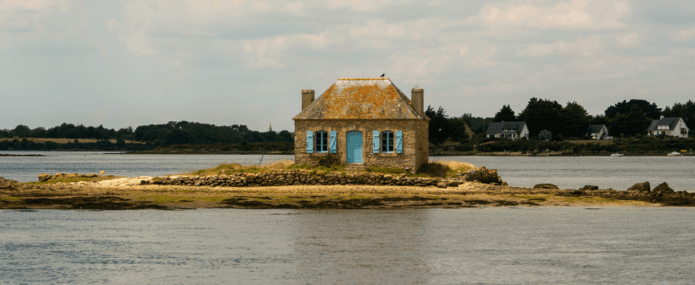
Data TRACC everywhere, 184 communities coached, €300 million to protect lives and property
The year 2025 will primarily be one of scientific maturation. Météo-France publishes the complete TRACC projections for overseas territories – Réunion, Guyana, French Antilles, Polynesia – via the portal DRIAS-Climat. The project Explore2 revolutionizes water forecasting by visualizing the evolutions of water resources by 2050, still aligned with DRIAS-Water.
On the ground, the State shifts to high gear. The Adaptation Mission, a true one-stop shop for public operators, has supported 184 communities by providing technical expertise and dedicated engineering. The Green Fund allocated no less than €42 million towards projects for protection against floods, cyclonic winds, wildfires, and coastal erosion, while €81 million more financed urban renaturation (de-sealing soils, combating urban heat islands).
The Axis 1 "Protecting the population" – with its **20 measures and 106 actions – hits particularly hard: the Barnier Fund allocates €300 million (+€75 million in 2025), the experimental system MIRAPI (post-floods North-Pas-de-Calais 2023-2024) unlocks €20 million to buy back 60 damaged properties, conduct 4,000 vulnerability assessments, and finance 2,800 resilience projects (+€25 million expected in 2026). On the work side, the decree of May 27, 2025 requires employers to act as soon as yellow heatwave alert: provision of fresh drinking water, personal protective equipment, specific training.
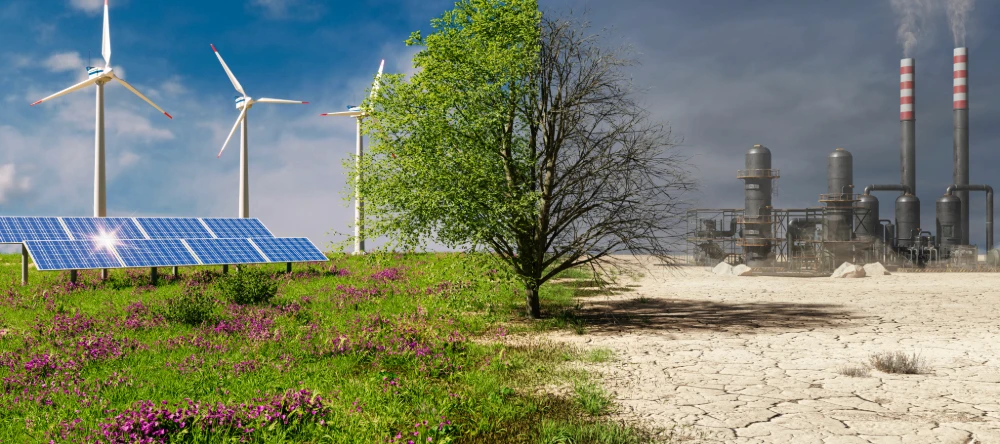
2026, the year of massive funding: data-savvy territories benefit
The Axis 2 "Territorial resilience/infrastructure" (12 measures, 84 actions) now incorporates the TRACC into all Territorial Climate-Air-Energy Plans (PCAE) and Rurality and Energy Transition Contracts (CRTE). Public schools benefit from a dedicated resource center for climate renovation (summer comfort funded by the Green Fund). On the major networks side, RTE announces €24 billion in investments to adapt 80% of its electricity network by 2040, while SNCF Réseau and RATP publish their first adaptation strategies.
Axis 3 "Economic resilience" (10 measures, 95 actions) democratizes the tools: the Chambers of Trades and Crafts are deploying Performa Adaptation (tested in Brittany, nationwide rollout in 2026), 8,500 companies have been supported via the Ecological Transition for Businesses platform, BPI France guarantees €1.1 billion in green loans for 3,000 companies.
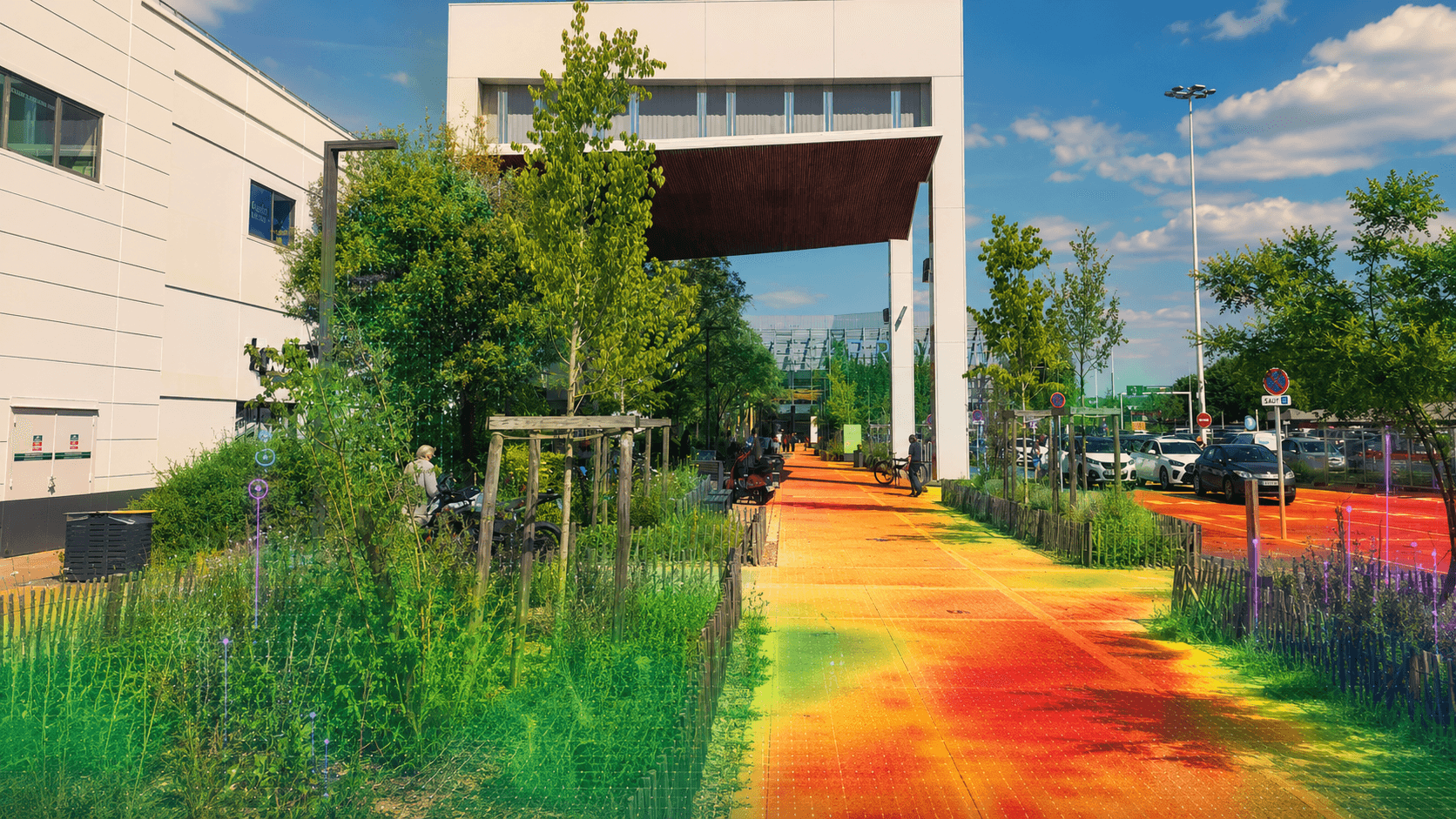
UrbanThink deciphers this dynamic: far from being a simple inventory, PNACC 3 sets out a data-centered roadmap. The DRIAS and Explore2 portals require territories to merge their local data (water, energy, mobility, natural risks) with national projections. 2026 is shaping up to be decisive: vulnerability studies are turning into funded action plans. Local authorities that already master their real-time environmental indicators will have a decisive strategic advantage on the Barnier Fund, Green Fund or CEE schemes, now conditional on taking climate risks into account.
PNACC 3 Measure 51: businesses also at the heart of climate adaptation
PNACC 3 measure 51 shows that adaptation to climate change does not rely solely on public policy directions: it also requires concrete, operational solutions that can already be mobilized by local actors. By recognizing the role of innovative companies in deploying artificial intelligence tools in the service of adaptation, this measure fully validates the approach carried by UrbanThink. With ThinkCities, we help organizations centralize their data, map their vulnerabilities, visualize climate risks, and prioritize the actions to be taken. Where measure 51 calls for moving from intention to action, our solution already provides a clear and actionable management framework. Would you like to see how this approach can apply to your organization or your sites?

APPENDICES
- PNACC progress report – February 2026: https://www.ecologie.gouv.fr/sites/default/files/documents/Point-d-avancement-du-PNACC-fevrier-2026.pdf
- Annex, detailed progress report by action – February 2026: https://www.ecologie.gouv.fr/sites/default/files/documents/ANNEXE_Bilan_detaille_de_l_avancement_du_PNACC-3_par_action_VF_web.pdf
- Summary of the progress report – February 2026: https://www.ecologie.gouv.fr/sites/default/files/documents/Synthese-du%20point-d-avancement-du-PNACC-fevrier-2026_0.pdf