Apr 9, 2026
Digital portal: centralize usage without adding complexity.

Digital is no longer rare in organizations. It is everywhere. And that is precisely where the problem begins. Between business applications, messaging tools, dashboards, document spaces, maps, Excel exports and collaborative tools, teams often spend more time searching, switching and rebuilding context than actually using information. Microsoft thus observes that a Microsoft 365 user is interrupted on average every 2 minutes by a meeting, an email or a notification, while INRS links hyperconnectivity to informational overload, a multiplication of demands and a possible deterioration in working conditions.
In this context, the digital portal should not be understood as just another interface. Thought out properly, it instead plays the opposite role: it reduces dispersion, structures access and restores consistency of use. The ENT model illustrates this logic well: the IH2EF reminds us that an ENT is a single entry point giving access to a set of information and services within a secure framework, while CNIL stresses the need to authenticate users and manage access according to actual needs.
The real problem: too many tools, not enough continuity
The issue is therefore no longer only that of digital transformation. In many organizations, the tools already exist. The real issue has become how they fit together. One tool for documents. Another for energy tracking. Another for CSR indicators. Another for mapping, internal communication or operational management. Taken separately, each meets a need. Together, they often end up producing a fragmented environment, where users themselves must connect the interfaces, data and uses. INRS describes this drift precisely through hyperconnectivity, information load and the growing difficulty of maintaining clear boundaries between activities, tools and working time.
This is where the notion of digital fatigue becomes central. It does not refer only to the number of screens or notifications. Above all, it refers to a cognitive cost. When messages, meetings, files, dashboards and requests pile up without a common logic, the day becomes fragmented. Digital is present, but no longer fluid. It becomes a succession of micro-disruptions that slow action, blur priorities and make decision-making harder.
A digital portal is not just a showcase website
Reducing a digital portal to a “more complete website” would miss its real function. A digital portal is first and foremost an organizational layer. It structures the journeys, prioritizes the services, allocates access rights and offers each user a tailored view of what they need to see, understand or manage. The ENT model is again very enlightening here: it brings together, within a single logic, personalized services, resources, shared spaces and communication tools.
In other words, the real question is not only: what tools should be made available? The real question is: who has access to what, in what context, for what purpose, and with what level of authorization? CNIL also reminds us that rights must be defined according to users’ actual duties, with a logic of least privilege and rigorous rights management.
Multi-application is not a flaw, as long as it is governed
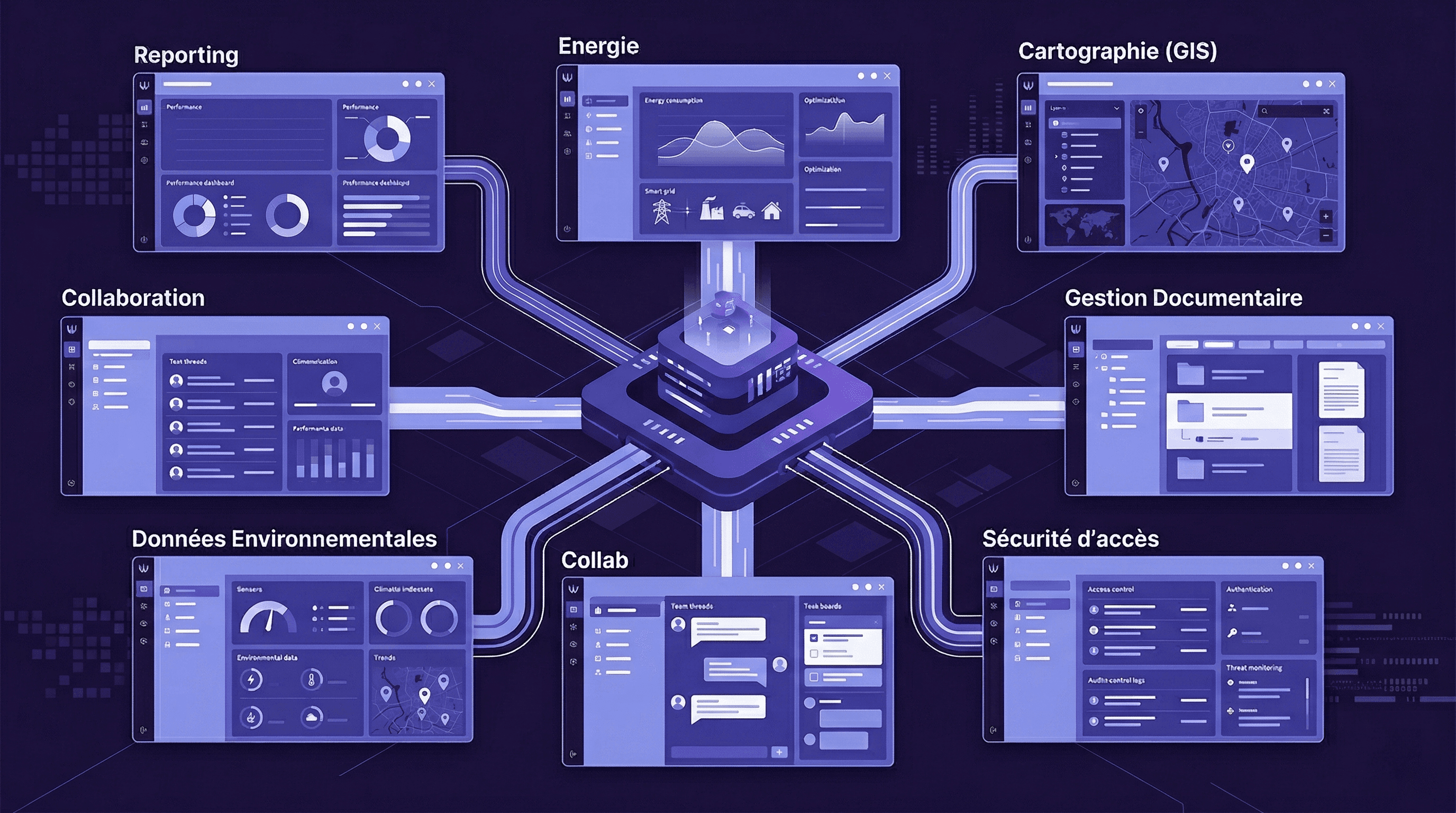
Let’s be clear: a good digital portal does not necessarily aim to replace all existing tools. Its strength can precisely be to federate them. That is the whole point of a multi-application approach: several building blocks can coexist, provided they are brought together in a more readable, more coherent and more secure experience. France Num also points out that centralizing information and documents on a single platform improves access to information, collaboration and certain forms of automation.
In an organization, this changes a lot. Instead of forcing users to move between a DMS, a mapping tool, an energy dashboard, a CSR module and isolated exports, the portal becomes a structuring entry point. It does not eliminate functional richness. It simply prevents that richness from turning into burdensome complexity.
What a digital portal changes in concrete terms
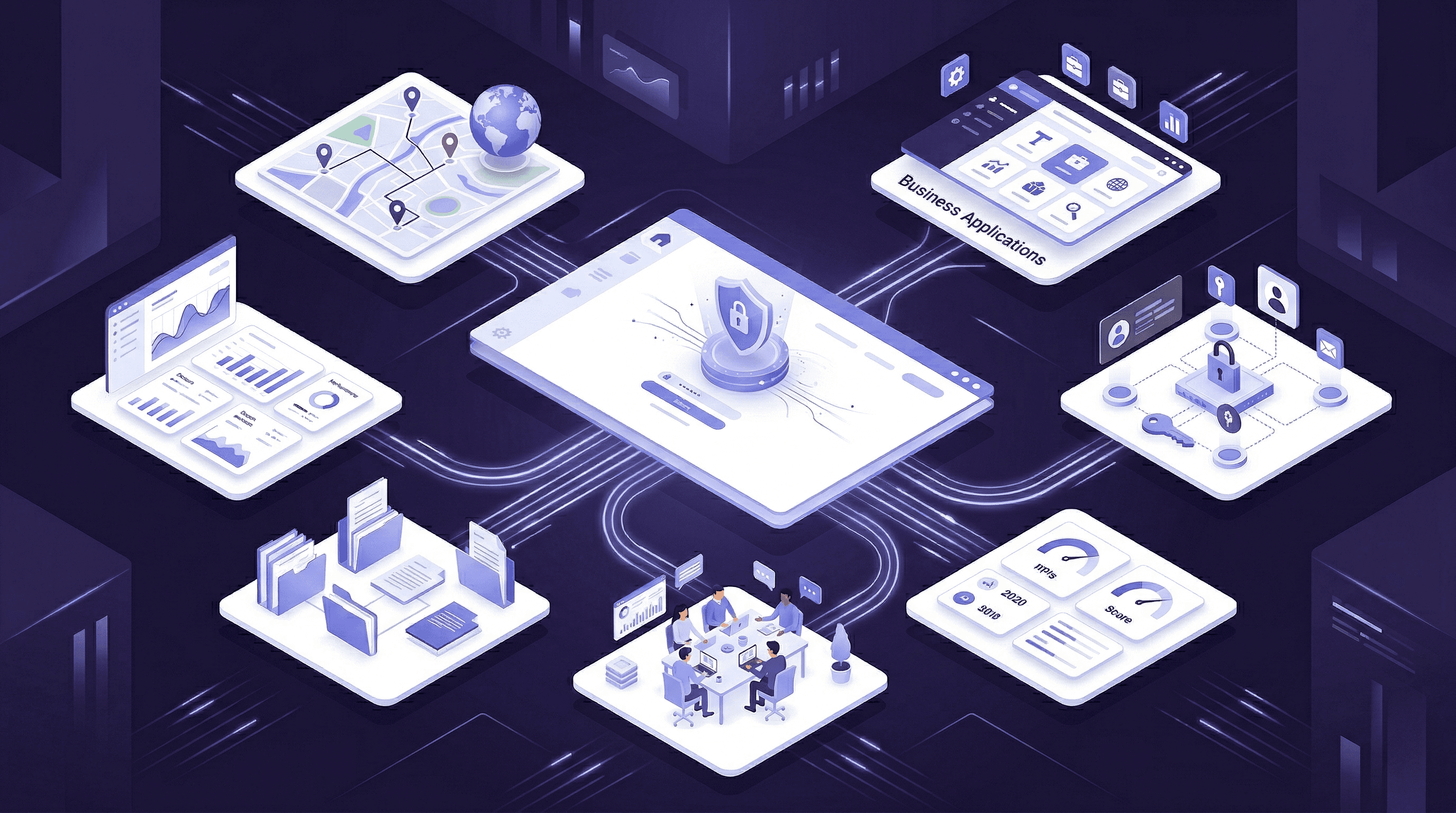
A well-designed digital portal generally delivers benefits on several levels: access, security, continuity of use, clarity, and cognitive load. It reduces breaks between documents, data, maps, indicators, and services. It clarifies what falls under consultation, contribution, validation, or management. And it limits the time wasted searching for information across too many separate environments. This approach directly echoes the CNIL's recommendations on rights management, which stress the need to regularly review rights, remove unnecessary permissions, and align access with the roles actually performed.
In a multi-site environment, the value becomes even stronger
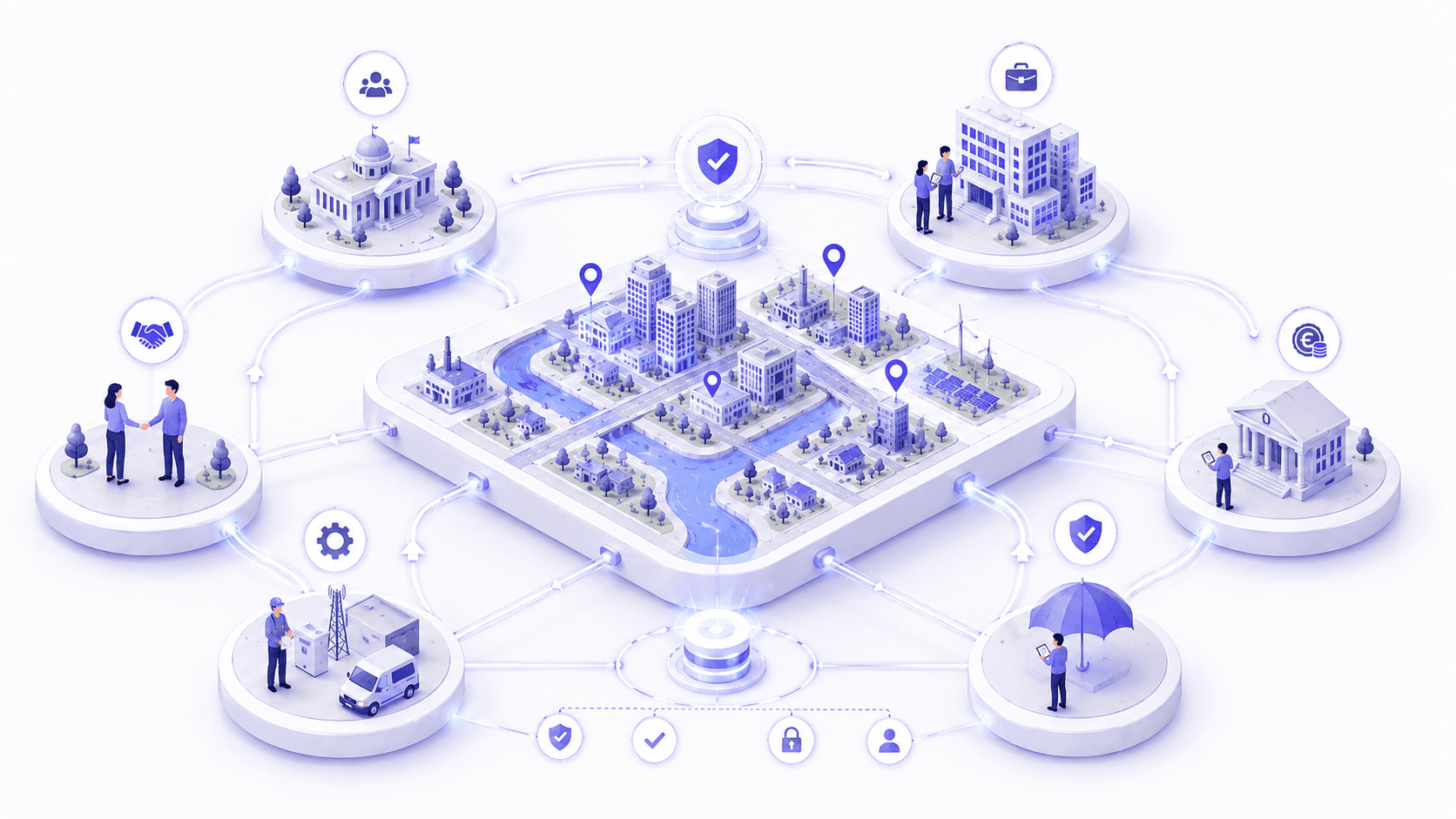
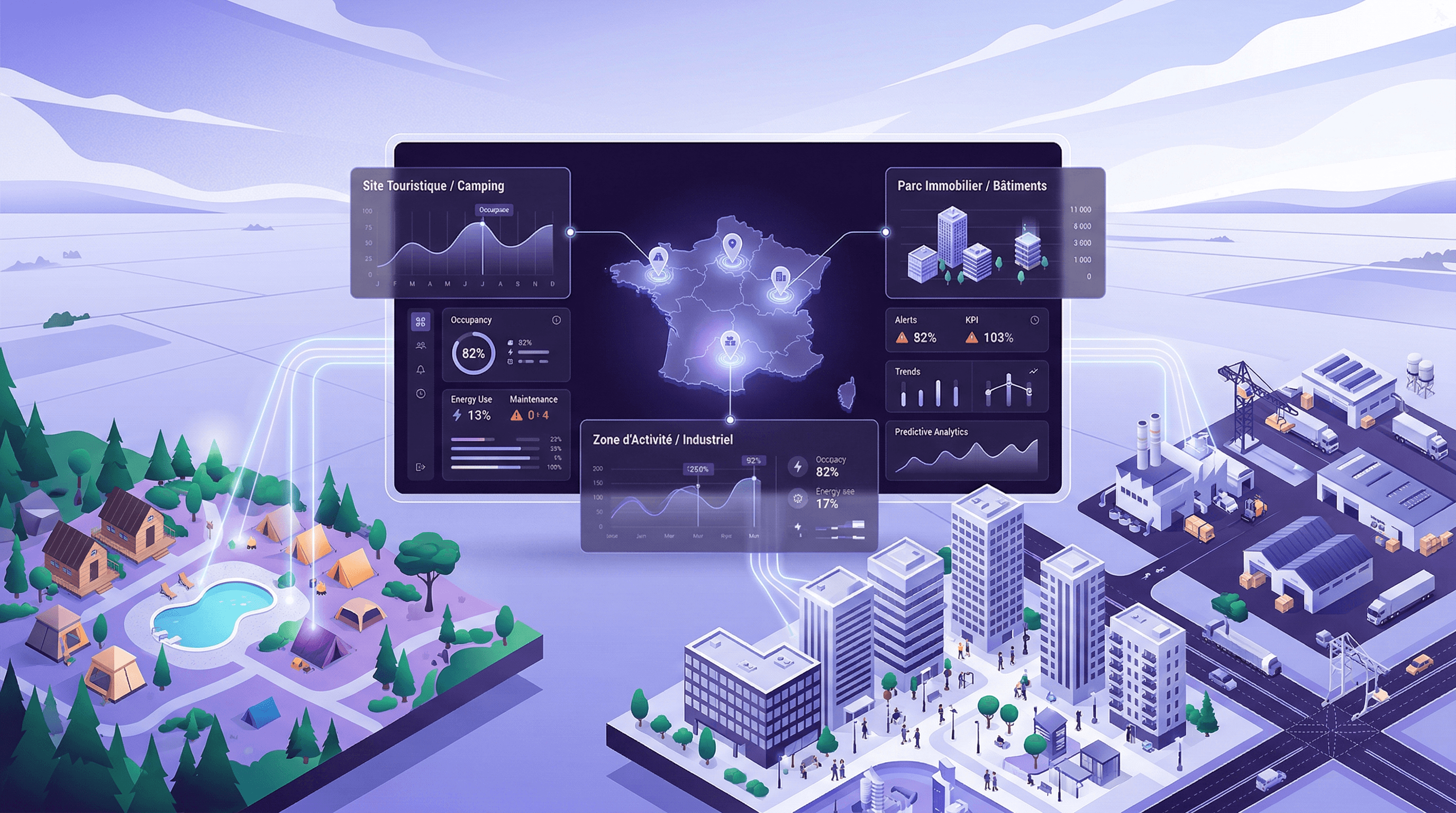
The value of the digital portal becomes even more obvious in a multi-site environment. Because in that case, the issue is no longer just about bringing tools together, but also about connecting several boundaries, several levels of access, and several business profiles within a shared framework. Without this, fragmentation no longer occurs only between applications, but also between sites, teams, reference systems, and local decisions.
This is precisely the kind of issue where ThinkCities adds value. UrbanThink positions this solution as a decision-support tool for the ecological and energy transition, capable of visualizing, analyzing, and acting without complexity. On the site, the platform is presented as a response to needs in environmental management, mapping, indicator tracking, and data structuring at the scale of a site, an asset portfolio, or a scope of action.
This logic is consistent with the way UrbanThink talks about the digital twin on its blog: not as a technological gimmick, but as a lever to turn data into decisions. It also aligns with the use cases presented on the Case studies page, where we can see how different environmental, energy, and operational issues can be brought together in a single framework for interpretation and action.
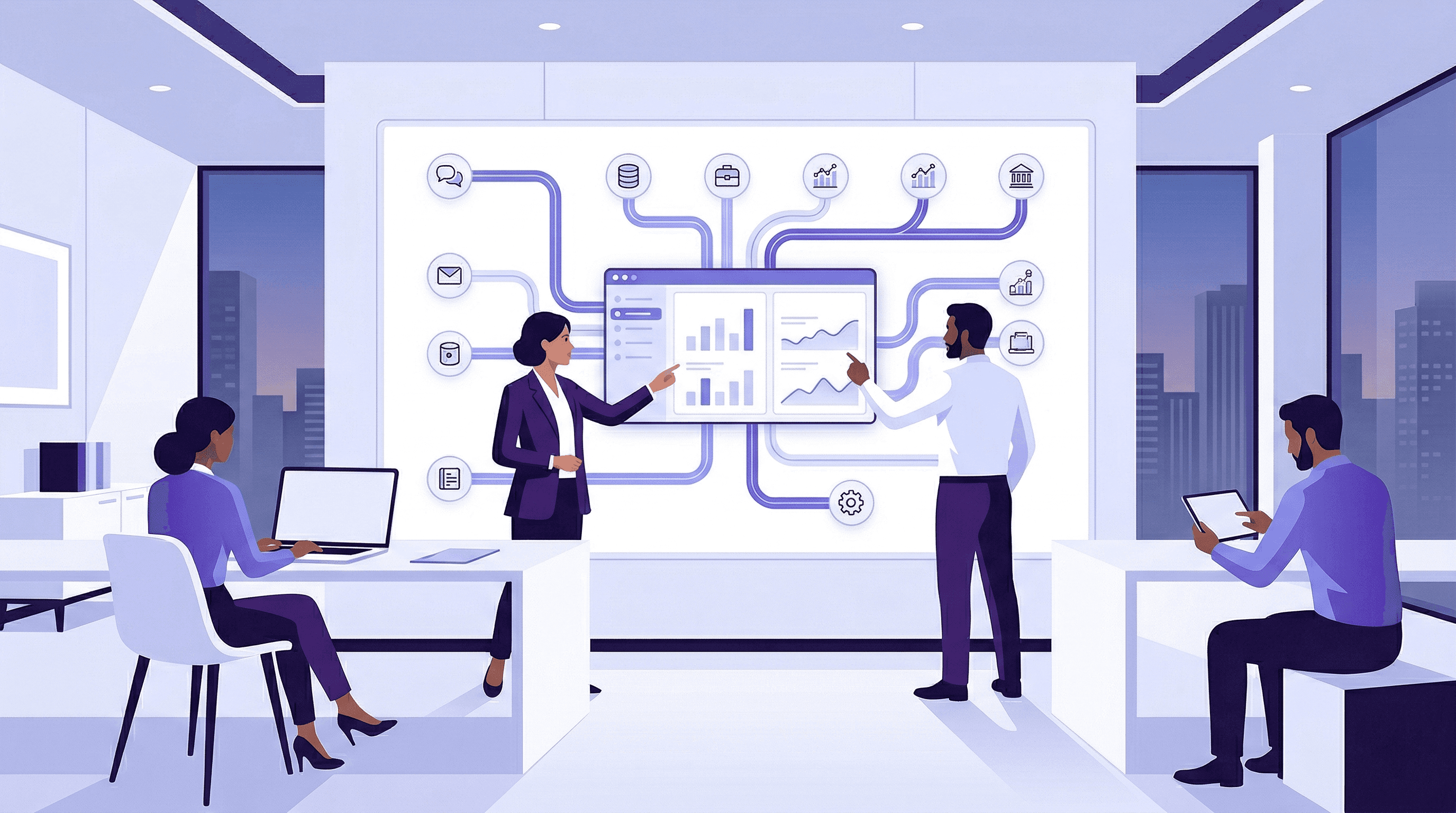
A digital portal can also connect several business components
The value of a digital portal is even greater when it makes it possible to connect several business dimensions without mixing them together. For example, an organization may need, in the same environment, access to environmental mapping, consumption tracking, resilience indicators, project documentation, or more specialized modules such as solar potential. This is exactly the kind of complementarity found between ThinkCities and Athénergie, the latter being presented by UrbanThink as a solution that can simulate the solar potential of rooftops and parking lots, estimate economic and environmental gains, and help decision-making on photovoltaic projects.
This interplay between several components clearly shows that a relevant digital portal is not necessarily a single tool in the strict sense. It is more a coherent access foundation to several specialized services, brought together in an easier-to-use experience.
Reducing digital fatigue is not about “doing less digital”
This is an essential point. Reducing digital fatigue does not mean removing all tools or reverting to more rudimentary practices. It means putting in place an environment where digital becomes more readable, better structured, and more useful. INRS also highlights the need to build a genuine digital usage strategy in order to preserve both performance, motivation, health, and the well-being of employees.
From this perspective, a digital portal addresses this challenge precisely when it is designed as a usage foundation rather than as a showcase. It centralizes without making everything uniform. It simplifies without impoverishing. It secures without rigidifying. And above all, it brings users back to a simple logic: access the essentials faster to make better decisions.
Why this topic is also part of responsible digital use
Talking about a digital portal also means talking about usage restraint. When tools multiply without coherence, they generate not only fatigue, but also redundancy: duplicates, re-entry of data, fragmented documents, unclear validation workflows, wasted time. Conversely, a more structured environment often makes it possible to rationalize uses and better align digital technology with the organization’s real needs.
This perspective directly echoes the reflections put forward by UrbanThink in its article on responsible digital, which presents the subject as a strategic challenge for companies and local authorities, while notably reminding readers of the growing weight of digital technology in environmental impact.
A lever for organizations that must better manage their transition
The digital portal becomes even more meaningful when it is part of a broader strategy of environmental management, ecological transition, or data structuring. This is also why it can be relevant, in an editorial linking strategy, to connect this topic to content such as Ecological transition in territories: toward sustainable and resilient planning or Smart city: revolutionizing urban planning through technology. On the UrbanThink blog, these pieces extend the same core idea: making better use of data to better guide action, prioritize investments, and strengthen resilience.
Conclusion: bringing order back into complexity
The digital portal is not another layer in an already saturated ecosystem. It is a way to bring order to complexity, especially when organizations have to manage multiple applications, multiple sites, multiple data flows, and multiple access levels. In a world where teams often suffer less from a lack of tools than from an excess of tools that are poorly connected to one another, it becomes a concrete lever for reducing digital fatigue, strengthening access governance, and improving management. This logic is consistent both with the CNIL’s recommendations on authentication and authorizations, with INRS’s findings on hyperconnectivity, and with UrbanThink’s positioning around decision-support tools such as ThinkCities or Athénergie