Urban heat islands — Aushopping Bordeaux Lac
Surface temperature modeling and comparison of development scenarios to reduce urban heat islands.
Client:
Nhood
Project type:
Biodiversity & ZAN
Date:
2025
Localization:
1 Av. des 40 Journaux, 33300 Bordeaux, France
Introduction
In a context of intensifying heatwaves, large commercial areas are particularly exposed to urban heat island phenomena. Their high level of soil sealing, the presence of vast mineral surfaces, and the low proportion of unpaved green spaces promote heat accumulation and reduce user comfort.
In Bordeaux Lac, Nhood called upon UrbanThink Platform to model surface temperatures of the Aushopping shopping center and to better understand the effects of the initial renaturation actions undertaken on the site. The study also made it possible to compare different development scenarios to identify the most suitable solutions.
Problematic
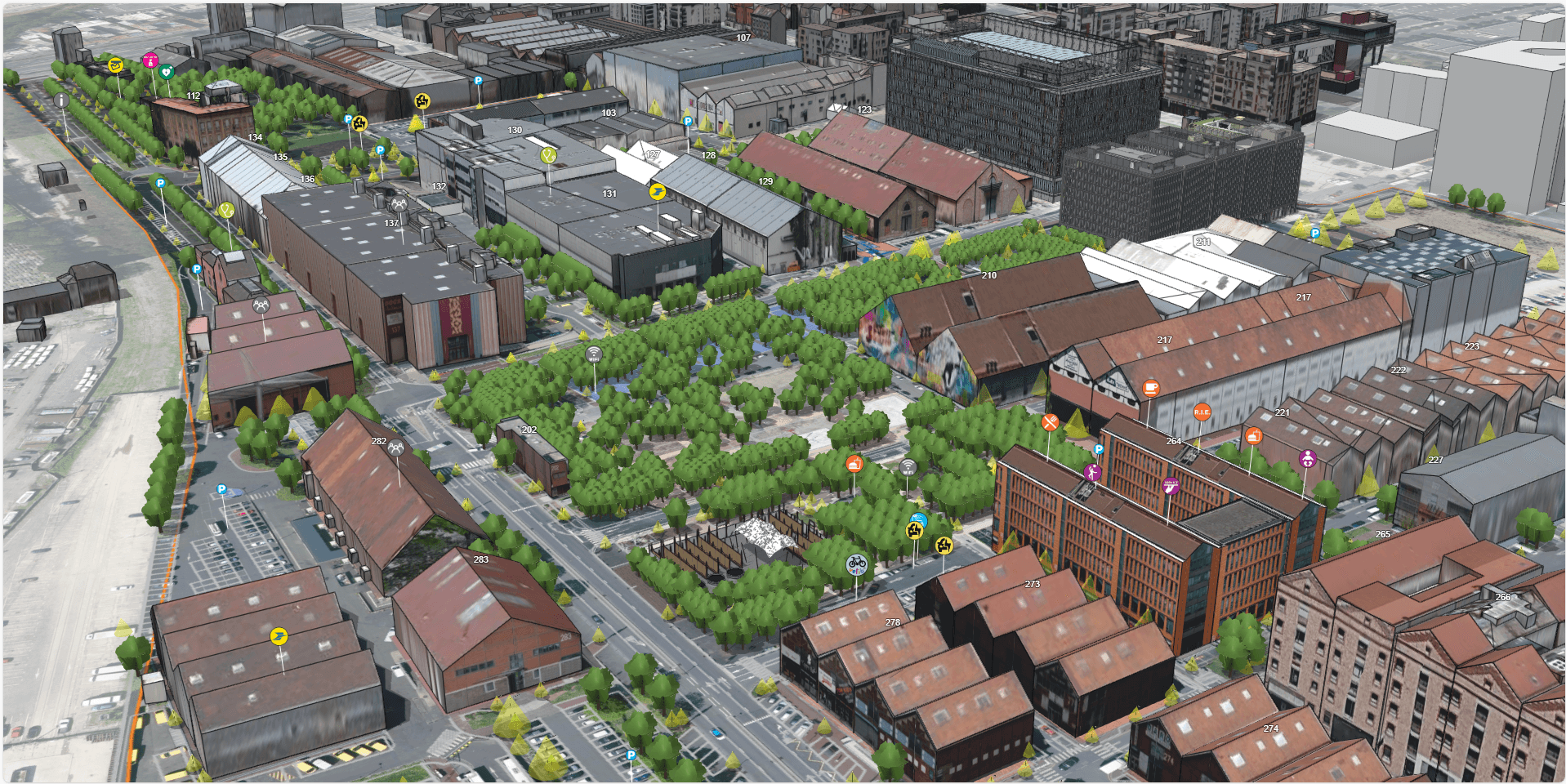
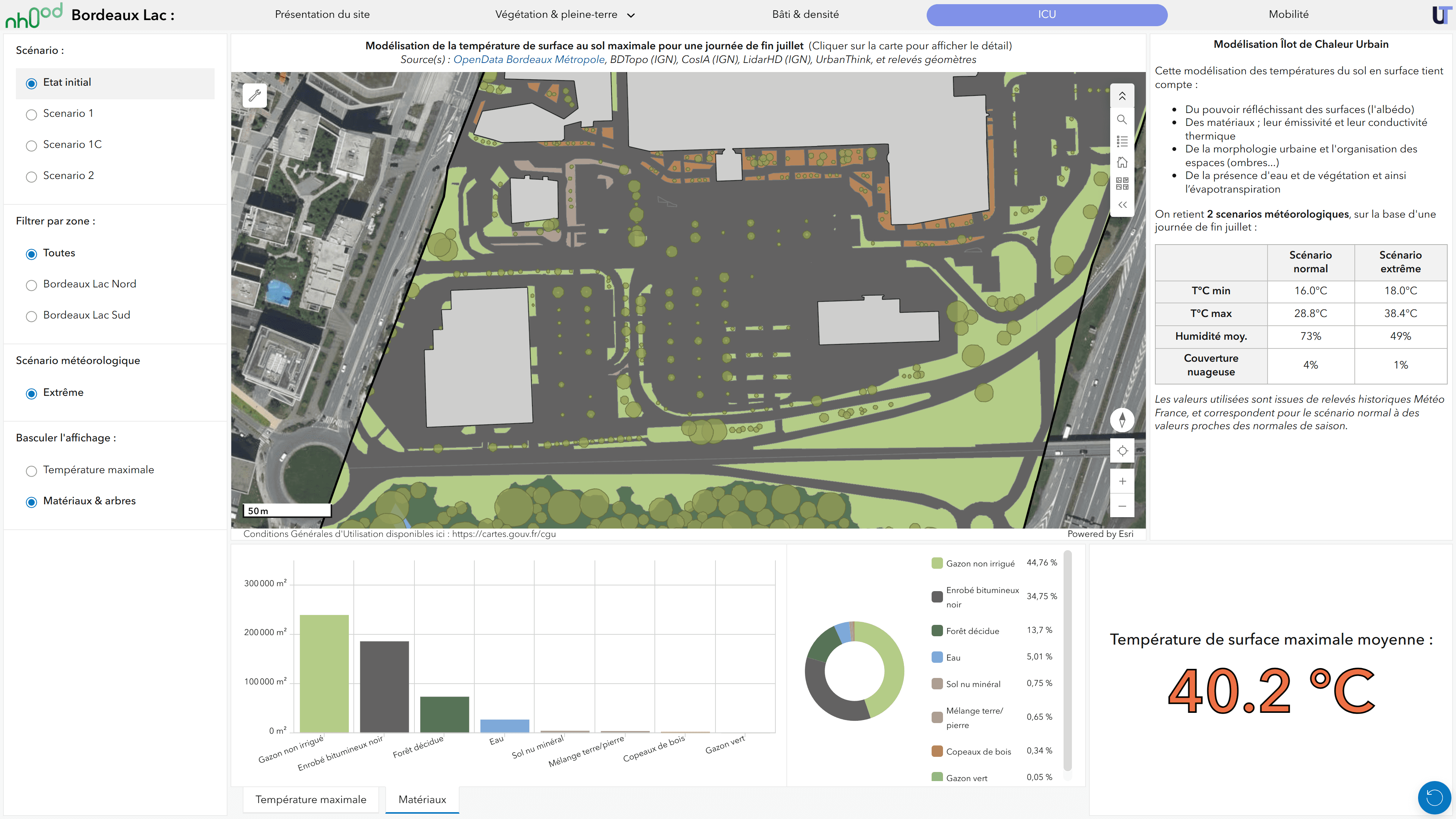
Located within a vast commercial area north of Bordeaux, the Aushopping Bordeaux Lac center is characterized by high soil sealing and a limited presence of vegetated surfaces. Parking lots, roads, and mineral spaces strongly accumulate heat during summer days.
The challenge was to have a precise vision of the most exposed areas, and then to measure the potential impact of several development options. This approach was intended to enable Nhood to build a global adaptation strategy and prioritize the actions to be implemented.
Process
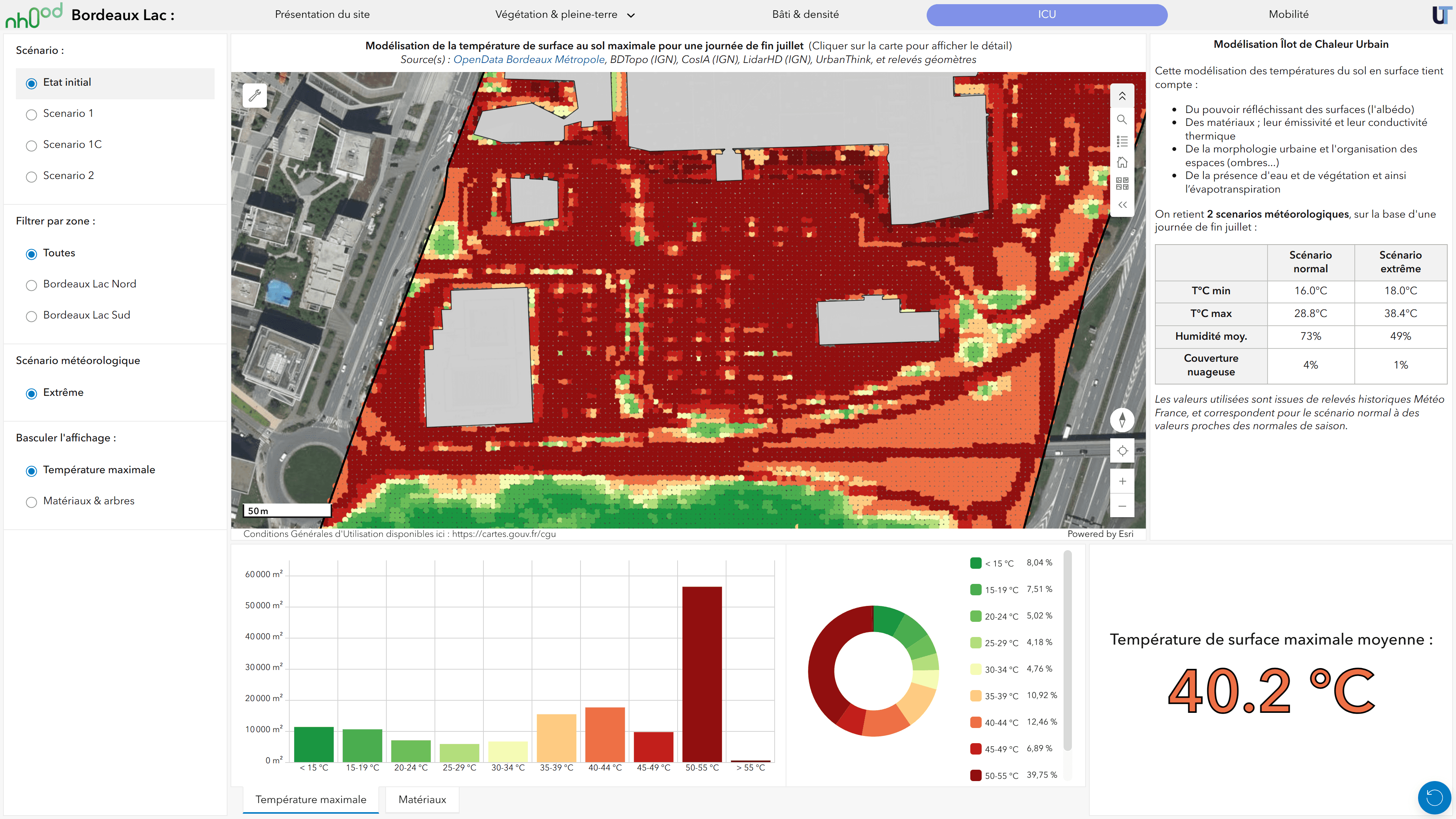
UrbanThink Platform conducted a mapping analysis and modeling of surface temperatures at the scale of the shopping center and its immediate environment. The study is based on various data sources, notably OpenData from Bordeaux Métropole, IGN databases, HD LiDAR data, and field surveys.
The simulations made it possible to identify the most sensitive surfaces and compare several development scenarios. The objective was to evaluate the potential effects of different actions, such as greening, soil de-sealing, creating shade, or strengthening landscape continuities.
This comparative analysis allows for the visualization of results associated with each scenario and guides decisions towards the most relevant solutions at the site scale.
Results
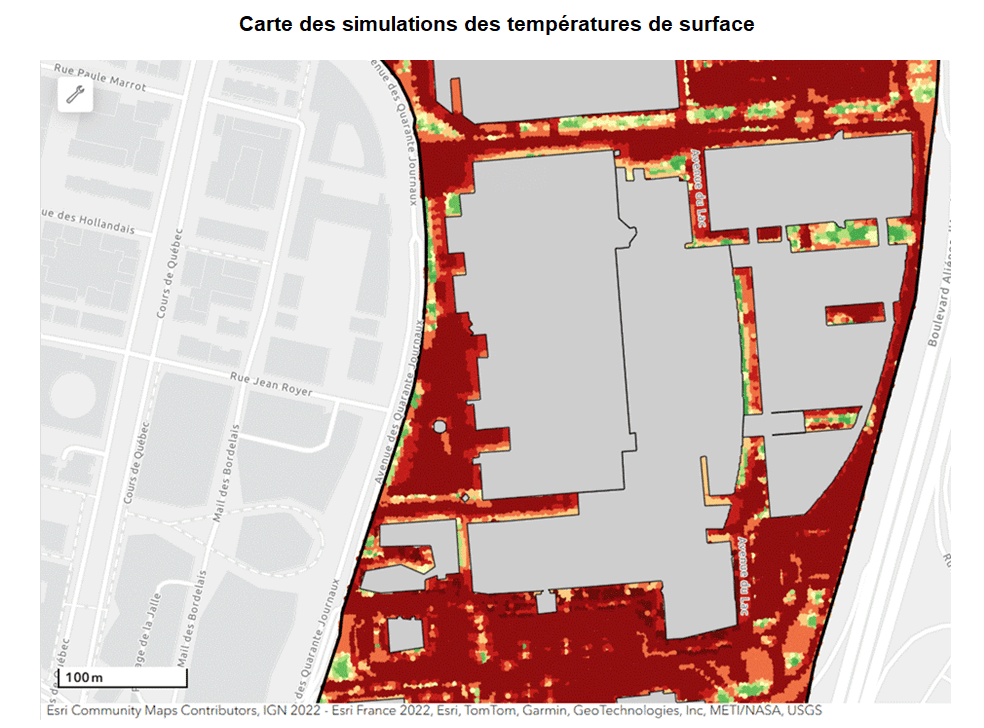
The modelings highlight a high exposure of the site to urban heat islands. On a hot July day, certain mineral zones, particularly parking lots and entirely sealed areas, exceed 45 °C on the surface.
The comparison of scenarios allows for the identification of developments with the greatest cooling potential and a better understanding of the localized effects of each action. It also shows that a one-off intervention is not always sufficient to sustainably improve thermal comfort across the entire site.
Thanks to this study, Nhood now has a decision-making tool to prioritize future developments and build a more systemic strategy, combining greening, soil de-sealing, creating shade, and green and blue continuities.