Jan 21, 2026
Territories and businesses reconciled by biodiversity: how to transform local actions into measurable value

Biodiversity is now establishing itself as a new common language between territories and businesses.
In the face of climate urgency, the erosion of life, and the increasing power of regulatory frameworks (CSRD, TNFD, SNB), it is no longer a mere environmental issue: it is becoming a strategic asset, bearing meaning, resilience, and economic value.
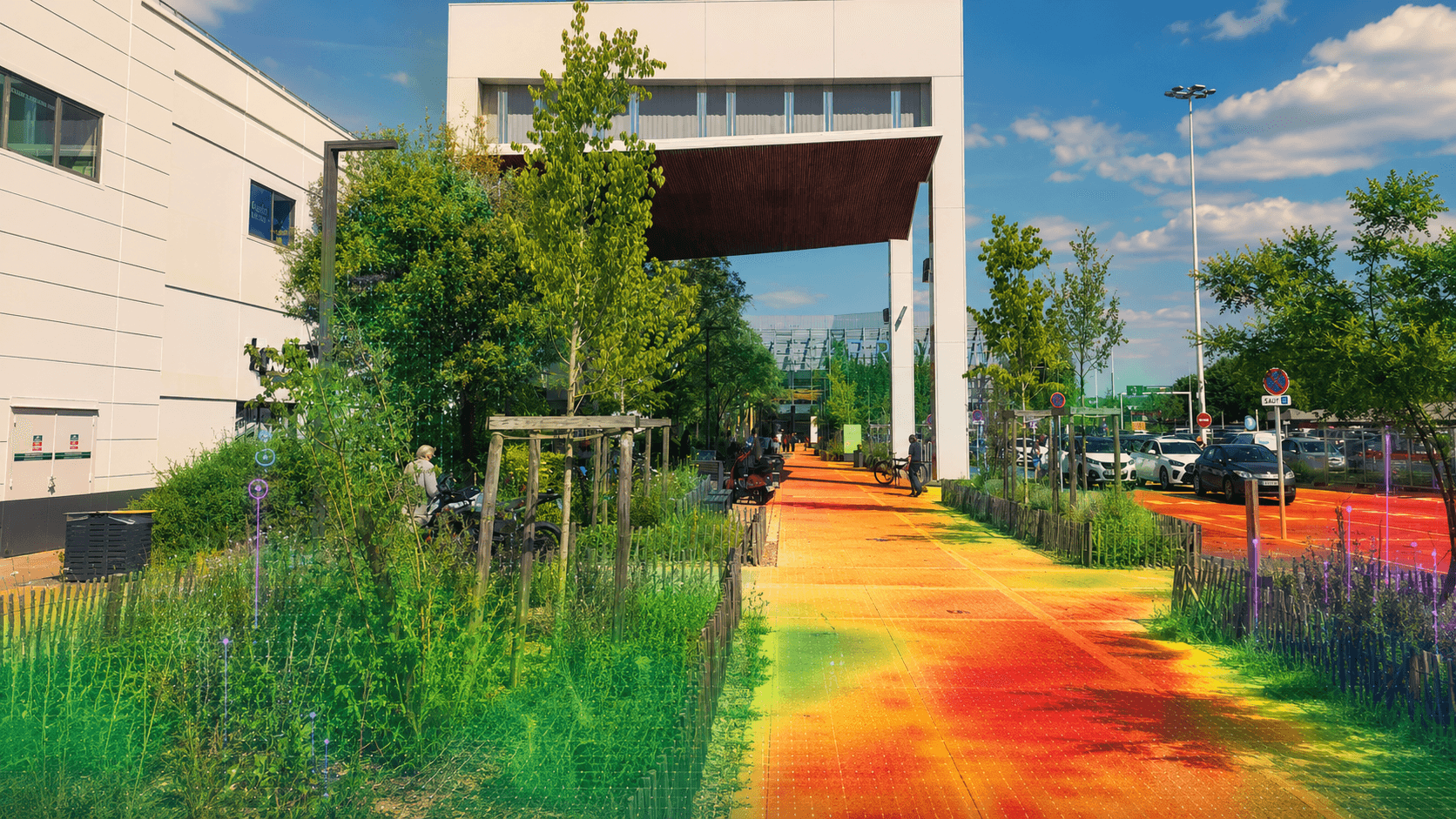
On the ground, initiatives are multiplying: bee hives, eco-grazing, reforestation, renaturation, ecological continuities.
Yet, despite their positive impact, these actions remain hardly visible, rarely comparable, and difficult to value on a large scale.
Local biodiversity actions: a proliferation still poorly structured
Across France and Europe, local authorities and businesses are implementing concrete actions in favor of life:
Installation of bee hives and pollinator habitats
Planting of hedges, groves, and urban forests
Eco-grazing for extensive maintenance of spaces
De-sealing and renaturation of soils
Protection of wetlands and ecological networks
These initiatives generate measurable ecosystem services: climate regulation, carbon storage, soil improvement, water resilience, human well-being.
However, in most cases, the data associated with these actions remain fragmented, carried out by multiple actors, without aggregation or a global reading.
👉 Result: an underestimated environmental value, difficult to integrate into territorial or business strategies.
Measuring biodiversity: a recognized scientific challenge
Unlike carbon, biodiversity cannot be reduced to a single unit.
Recent work converges towards a multi-indicator approach, combining:
species abundance (MSA – Mean Species Abundance),
ecosystem integrity,
pressure on habitats,
restoration potential.
Methodologies like Global Biodiversity Score, STAR metric, or the first Biodiversity Impact Credits aim to make impacts comparable and exploitable by decision-makers.
This evolution addresses a clearly identified need: to objectify positive impacts, not just to reduce negative impacts.
An increasingly structuring political and economic framework
Biodiversity and public policies
The National Biodiversity Strategy 2030 sets ambitious goals for habitat restoration and mobilization of economic actors.
At the international scale, the Kunming-Montreal global framework adopted at COP15 commits states and businesses to nature-positive trajectories.
Biodiversity and the economy
According to the IPBES, biodiversity degradation could represent up to 25 trillion dollars in annual economic losses globally.
Conversely, investments in nature are identified as levers for economic and territorial resilience (World Bank, 2024).

Territories and businesses: biodiversity as a field of reconciliation
Biodiversity has a unique strength: it reconciles historically opposed interests.
Territories see it as a lever for resilience, attractiveness, and quality of life
Businesses find it a tool for creating sustainable value, local acceptability, and regulatory anticipation
Citizens benefit from a healthier and more vibrant environment
But this dialogue cannot operate sustainably without measurable proof.
From biodiversity to carbon sequestration: a logical continuity
Natural ecosystems play a key role in the carbon cycle.
Living soils, forests, grasslands, wetlands, and ecological infrastructures directly contribute to carbon sequestration and climate adaptation.
Linking biodiversity and carbon enables:
to quantify often invisible positive impacts,
to align biodiversity, climate, and low-carbon strategy,
to move away from a purely declarative logic.
It is precisely at this level that digital tools become crucial.
ThinkCities : making biodiversity measurable and actionable
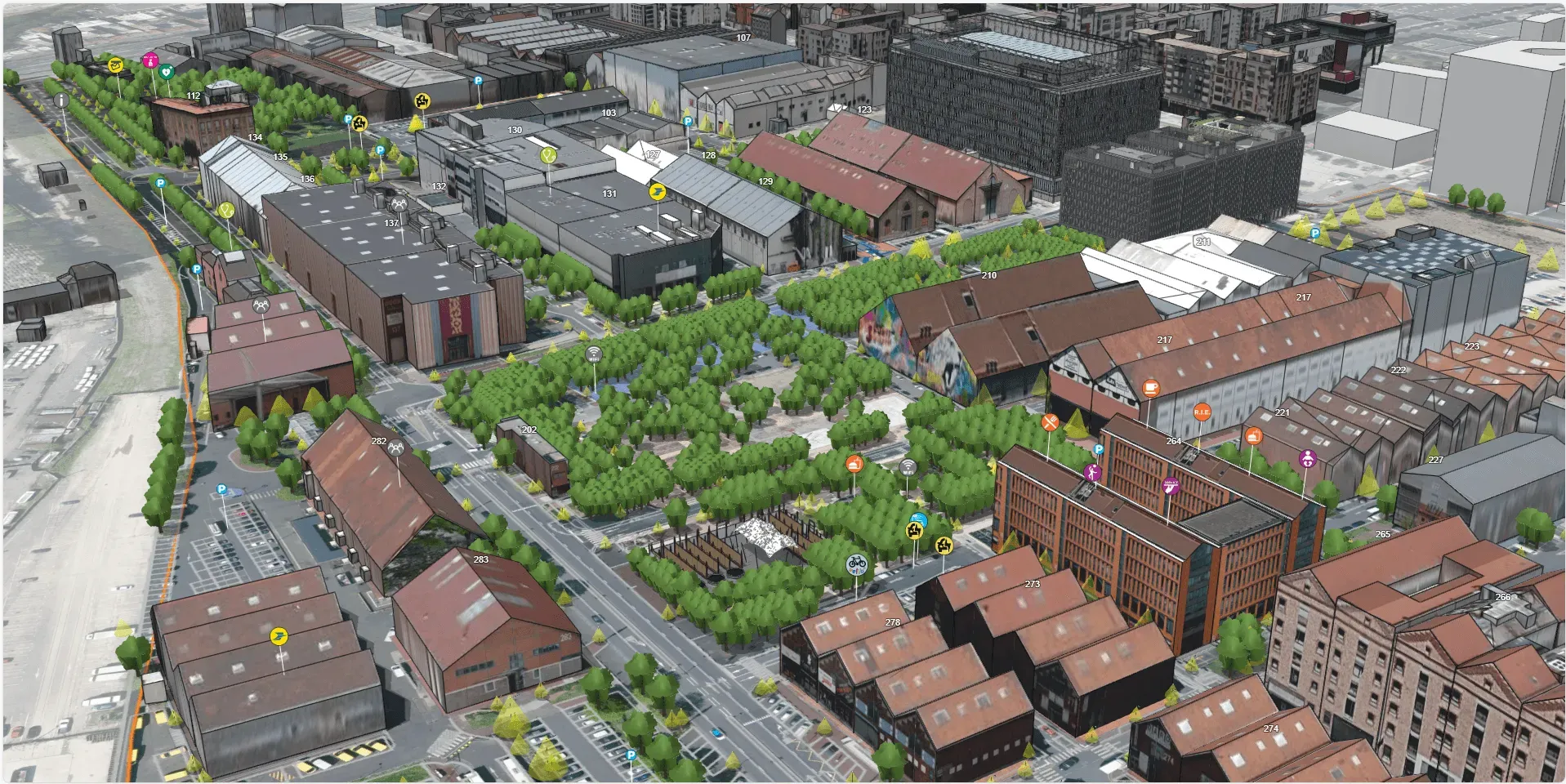
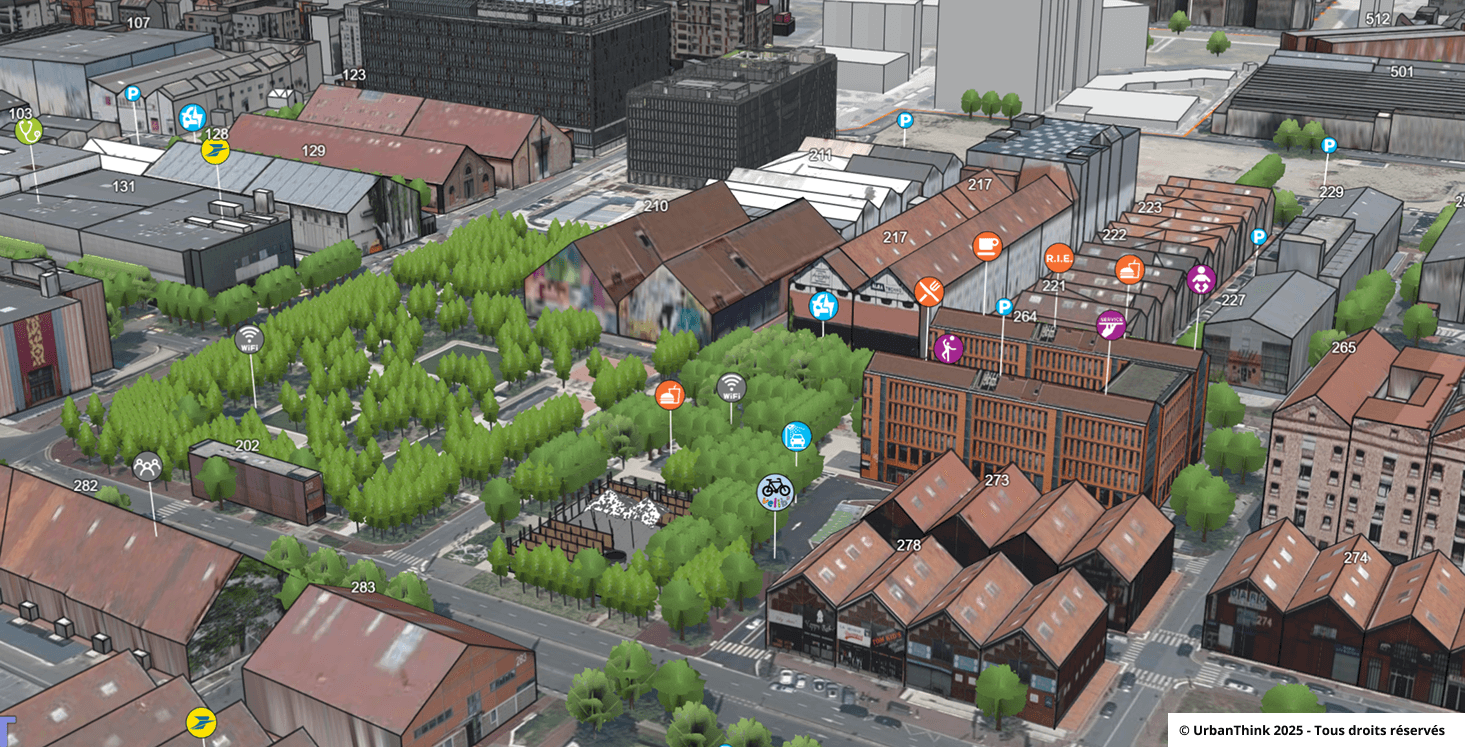
The solution ThinkCities, developed by UrbanThinkPlatform, relies on a digital environmental twin to transform scattered biodiversity actions into exploitable strategic indicators.
The solution ThinkCities specifically allows for:
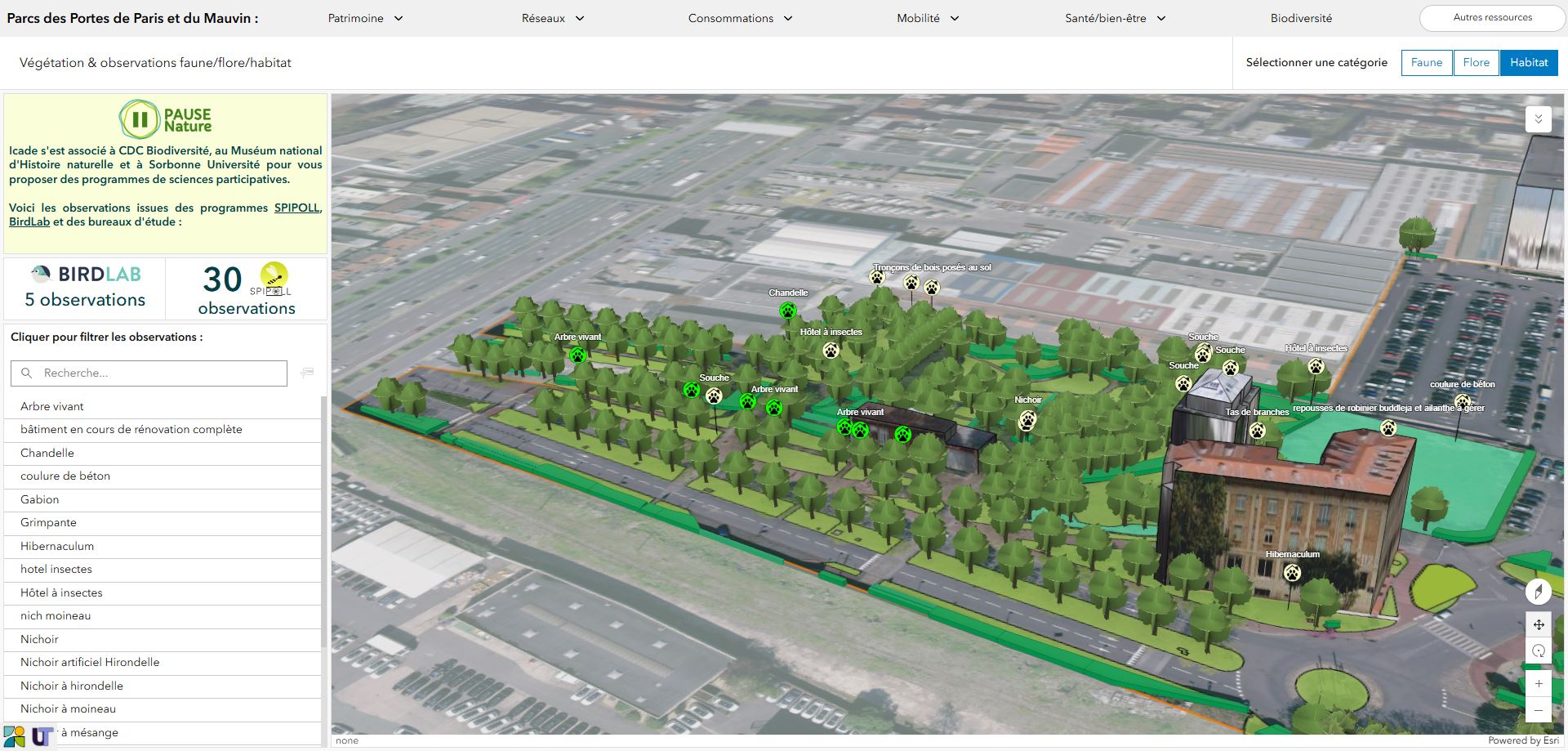
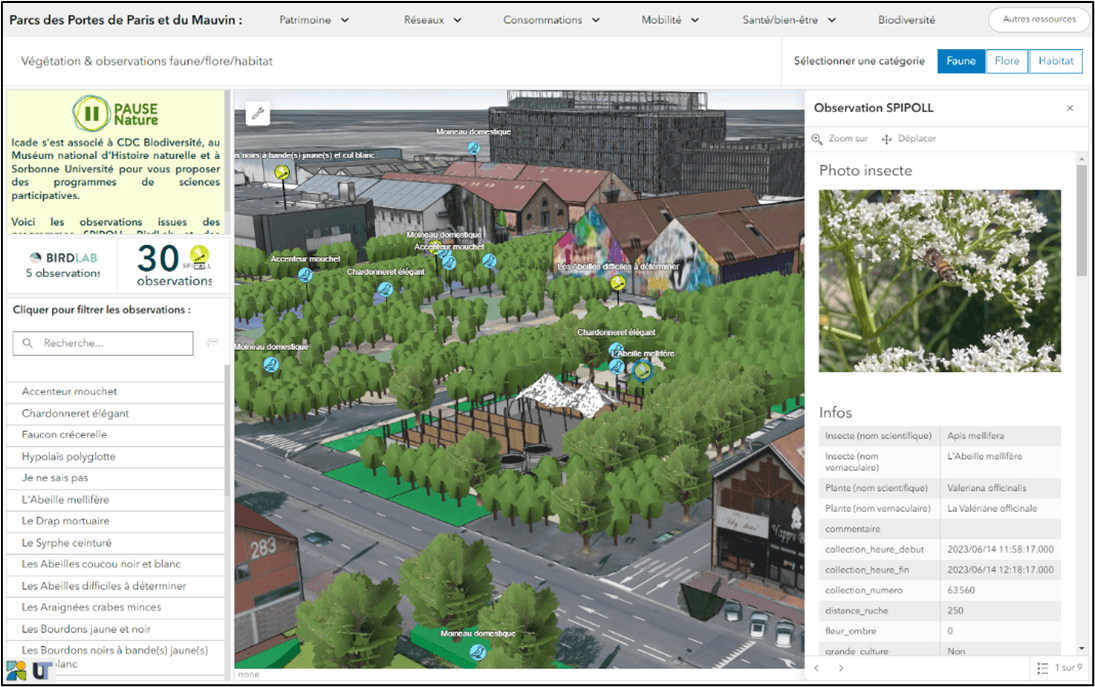
Centralizing all biodiversity actions of a territory or a company
Mapping them spatially (soils, uses, habitats, climate)
Quantifying ecosystem services, including the potential for carbon sequestration
Tracking changes over time and measuring the real impact of decisions
Facilitating dialogue between public and private actors around shared indicators
Thanks to this approach, local initiatives like eco-grazing, beekeeping, or renaturation cease to be isolated actions and become controllable levers of environmental strategy.
Measuring to create sustainable value
Biodiversity is no longer a nice-to-have.
It becomes a structuring tool for transformation, provided it is measured rigorously.
Actions exist.
Regulatory frameworks are strengthening.
Societal expectations are clear.
👉 What is still missing are tools capable of linking field, data, and decision.
This is precisely what an approach like that of UrbanThink Platform enables: making the impact of living systems visible for better action.